
Bundibugyo Ebola: why children need care designed for them
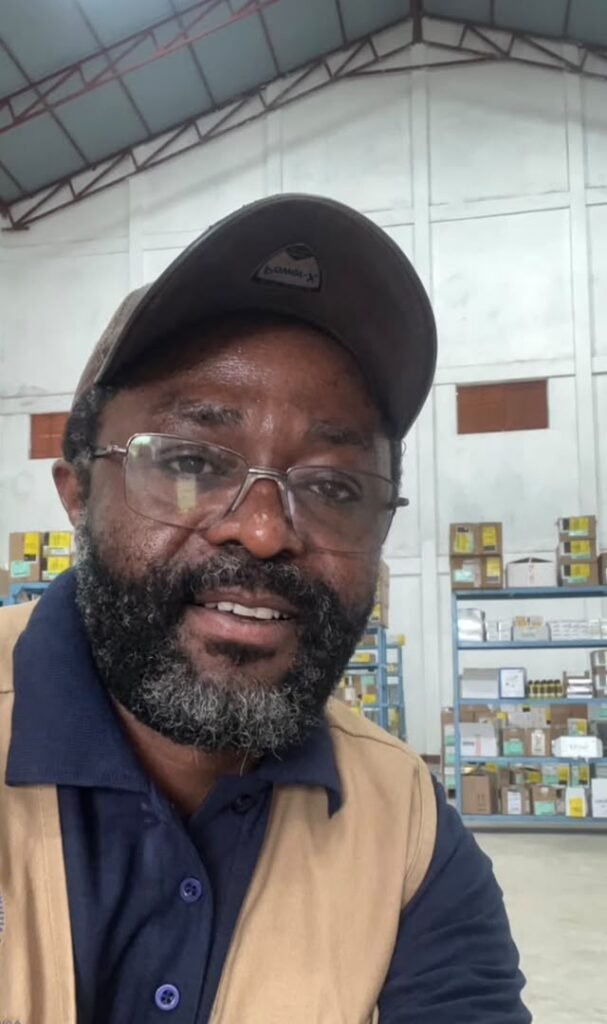
In the Bundibugyo virus disease outbreak that has hit the Democratic Republic of the Congo since May 2026, children are dying more often than adults. Doctoral researcher Kambale Katsuva Poteau and the ASPIRE team propose a model to change that.
A finding that cannot wait
As of 30 July 2026, WHO had recorded 3,605 confirmed cases of Bundibugyo virus disease in the DRC, including 743 children. Of 1,587 deaths, 330 were children under 18.
In other words, children make up nearly one in four patients, but almost one in three deaths. Among children under five, the fatality rate is more than twice that of adults.
There is currently no licensed vaccine or treatment for this virus. What saves lives is good supportive care, delivered at the right time: rehydrating, correcting blood sugar, monitoring, and acting fast.
In children, everything moves faster
At first, the disease looks like many others: fever, headache, aches, sometimes vomiting and diarrhoea. Bleeding, which many people associate with Ebola, is actually rare early on. So it should not be awaited before acting.
But in a child, things can turn in a matter of hours. Their reserves are small: dehydration quickly leads to shock, and blood sugar can drop suddenly. Finding a vein in a small, dehydrated patient while wearing gloves and a protective suit is already a challenge. And in many treatment centres, laboratory tests are not available.
The problem is not only the child
This is the heart of the proposal. A child can die not because the right treatment does not exist, but because it could not be delivered:
– no cannula of the right size;
– no glucometer to detect low blood sugar;
– a health worker exhausted after hours in protective gear;
– a shift change at the wrong moment.
These failures are rarely counted. Yet they weigh heavily on survival.
The PPE model: Patient, Provider, Environment
The proposal rests on a simple idea: a medical decision is safe only when three conditions are met.
1. The patient needs it: what is the child’s condition, weight, symptoms?
2. The provider present can carry it out: are they trained for this procedure? How much longer can they keep going?
3. The environment allows it: are the right equipment, oxygen and power available?
If any answer is “no”, the team knows what to do: call the paediatric lead, work in pairs, or switch to a backup solution prepared in advance.
Medicines tailored to each child
The second pillar: in an emergency, it is tempting to give everyone the same “kit”. In children, that is risky. Too little, and the treatment does nothing; too much, and it becomes dangerous.
The model proposes that every prescription take five factors into account: age, weight, severity, main symptoms and complications.
Measuring to improve
So that this model does not remain a good intention, the article proposes simple indicators. How many children are weighed on arrival? How many have their blood sugar checked within the first hour? How many treatments were delayed for lack of equipment? What is the death rate in the first 48 hours?
What we are calling for
This work does not replace WHO recommendations: it makes them workable in the field, for children. It is a conceptual proposal that now needs to be tested in pilot centres.
We call for a dedicated paediatric component within the outbreak response, with trained teams, appropriate equipment and rigorous follow-up.
Read the full article in the ASPIRE library:https://aspire-science.org/memoires/an-integrated-paediatric-component-for-the-management-ofbundibugyo-virus-disease-a-proposed-patient-providerenvironment-model/
Authors: Kambale Katsuva Poteau, Moïse Muhindo Mwanamolo and the ASPIRE team.