Health News — World and Africa (October 2026)
As of mid-October 2026, Central and East Africa are facing the second-largest Ebola outbreak ever recorded, while cholera, mpox and tuberculosis continue to strain health systems weakened by falling international aid. This brief reviews these topics, then devotes a full article to tuberculosis.
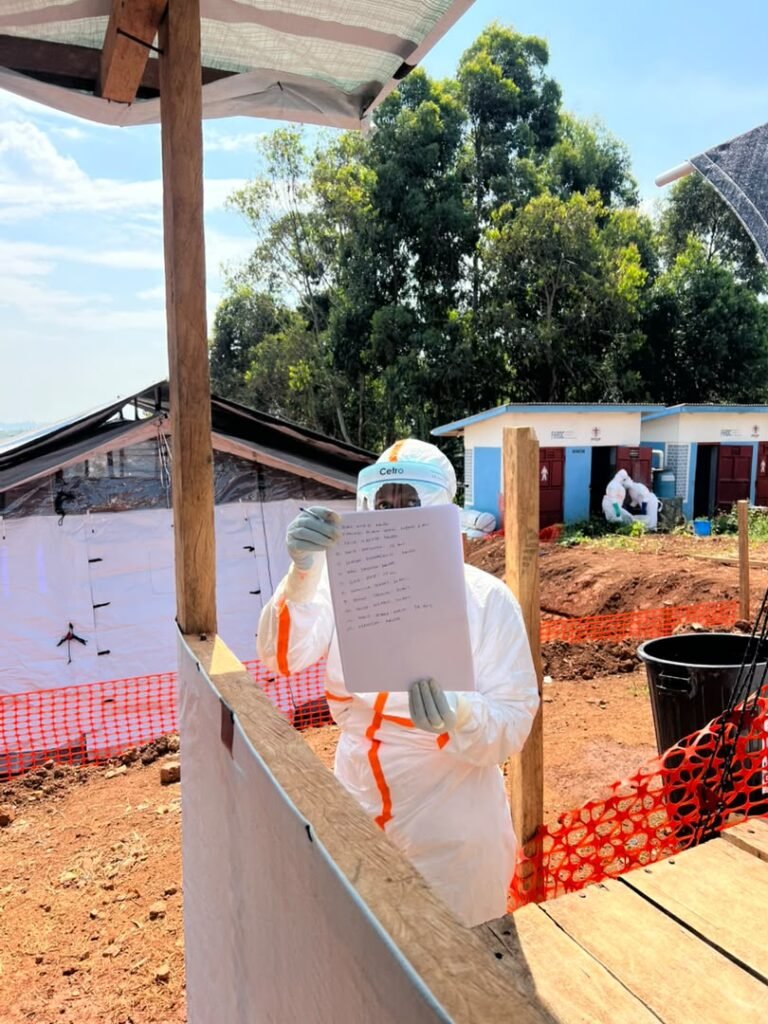
As of mid-October 2026, Central and East Africa are facing the second-largest Ebola outbreak ever recorded, while cholera, mpox and tuberculosis continue to strain health systems weakened by falling international aid. This brief reviews these topics, then devotes a full article to tuberculosis.
1. Bundibugyo Ebola: an unprecedented outbreak in eastern DRC
As of 14 October 2026, the DRC had recorded 9,277 confirmed cases and 4,478 confirmed deaths from Bundibugyo virus disease, according to the US CDC. It is now the second-largest Ebola outbreak in history, and it is spreading faster than previous ones.
An international emergency since May. WHO declared the outbreak a public health emergency of international concern on 18 May 2026. Five months on, transmission remains high and fluctuating, with no sustained downward trend (UN News).
Geography. The outbreak affects seven provinces and 65 health zones in the east of the country. Ituri accounts for more than 70% of cumulative confirmed cases, but North Kivu is of growing concern: MSF compares the situation to a “megafire” with multiple simultaneous hotspots (VIH.org).
Beyond borders. Uganda’s outbreak has been declared over (20 cases, 2 deaths). Kenya confirmed a first imported case in early October, then a second. An infected MSF staff member was evacuated to the Netherlands on 1 October (WHO, DON619).
Why it is so hard to control.
- The licensed Ervebo vaccine targets the Zaire species and is not expected to protect against Bundibugyo. No specific vaccine or treatment is approved yet; several candidates are in trials.
- Genomic analysis identifies a variant distinct from those of the 2007 and 2012 outbreaks.
- Armed conflict, population displacement and community mistrust hamper detection and contact tracing.
- Observed case fatality is close to 49% of confirmed cases.
For health workers, infection prevention and control (triage, PPE, early isolation) remains the first line of defence, as WHO stressed in July.
2. Other stories making the news
Cholera: the DRC on the front line
From January 2025 to the end of September 2026, the DRC recorded more than 125,000 suspected cholera cases and 3,644 suspected deaths, according to WHO. The outbreak is spreading alongside Ebola, in the same areas where safe water and sanitation are lacking (UN News). Across the continent, Africa CDC counted more than 311,000 cases and 7,187 deaths in 25 countries in 2025; Sudan, the DRC, South Sudan and Angola accounted for 85% of deaths (AllAfrica).
Mpox: emergency lifted, transmission continues
Africa CDC lifted the continental emergency in January 2026, but the disease has not gone away. Between 6 July and 16 August 2026, 11 African countries still had active transmission, with 1,153 confirmed cases and 7 deaths. Since January 2025, 35 African countries have reported 52,424 confirmed cases. Clade Ib reached Chile and Hungary for the first time, and a global initiative on vaccine access was launched in Addis Ababa in late August (AllAfrica).
Funding: the shock of budget cuts
Falling external aid is the backdrop to all these crises.
- In the DRC, US humanitarian funding fell from about $920 million in 2024 to $142 million in 2025, a drop of 85%. HIV, tuberculosis, malaria and immunization programmes are directly affected (AllAfrica).
- The Global Fund has secured only $11.85 billion of the $18 billion needed for 2026–2028; nine of the ten largest donors cut their pledges (IDPC / Human Rights Watch).
Innovation: Africa bets on AI for health
From 30 September to 2 October, Kigali hosted the Africa HealthTech Summit 2026. Policymakers, innovators and investors presented AI solutions for prevention, noncommunicable diseases and reproductive health, with Africa CDC calling for regional cooperation (AF.net).
3. Tuberculosis: a curable disease that still kills someone every 83 seconds in Africa
Tuberculosis remains one of the world’s deadliest infectious diseases, even though it is preventable and curable. In the WHO African Region, it causes one death every 83 seconds (WHO Africa).
A global burden in slight decline
According to WHO’s Global Tuberculosis Report 2025, the most recent reference, 10.7 million people developed TB in 2024, down from 10.8 million in 2023. It is the first decline since the COVID-19 pandemic, but the level remains above pre-2020 figures (MedTech World).
|
Indicator |
Status |
Target |
|---|---|---|
|
Reduction in deaths since 2015 |
−29% |
−75% by 2025 |
|
Share of cases in 30 high-burden countries |
87% |
— |
|
Annual funding (2024) |
$5.9 billion |
$22 billion by 2027 |
|
Treatment success rate (drug-susceptible TB) |
88% |
— |
Africa: successes, but a regional gap
Some countries show the disease retreats when resources follow:
- South Africa cut incidence by 50% between 2015 and 2023, the first country in the region to surpass the 2025 target.
- Mozambique, Tanzania, Togo and Zambia reduced TB deaths by 75%.
- In East and Southern Africa, incidence fell from 466 to 266 cases per 100,000 people between 2000 and 2023.
Central and West Africa are progressing more slowly. And for nearly 68% of affected African households, the cost of the disease is catastrophic (WHO Africa).
In the DRC: multidrug-resistant TB and donor dependence
In August 2026, the National Tuberculosis Programme (PNLT) stressed that multidrug-resistant TB remains a major public health concern. The country relies on external funding for 97% of medicines, diagnostics and patient care (ACP).
This dependence leaves the DRC highly exposed to current cuts. Modelling cited by WHO estimates that a sustained drop in aid could cause up to 2 million additional deaths and 10 million additional cases worldwide between 2025 and 2035 (AllAfrica). The Global Fund provides nearly two-thirds of international TB financing.
Hope for a new vaccine, the first in a century
BCG, in use since 1921, protects young children well against severe forms but offers little protection to adolescents and adults. The M72/AS01E candidate (developed by GSK and IAVI) showed about 50% efficacy against pulmonary TB in adults already infected, in a phase 2b trial. The phase 3 trial, run in five countries including South Africa, has enrolled its 20,000 participants (EWN).
Key takeaways
- Any cough lasting more than two weeks warrants screening, especially in people living with HIV, malnourished people, or contacts of a patient.
- A complete, uninterrupted course of treatment cures the vast majority of patients and limits the emergence of resistance.
- Without greater domestic funding, Africa’s recent gains remain fragile.
Sources
- CDC — Ebola Outbreak: Current Situation (14 Oct 2026)
- WHO — Disease Outbreak News, Bundibugyo, DRC (DON619)
- UN News (French) — Ebola persists in DRC, Kenya confirms 2nd case (15 Oct 2026)
- VIH.org (French) — Ebola 2026: new Bundibugyo variant identified
- AllAfrica — 11 African countries record 1,153 mpox cases in six weeks (Sept 2026)
- AllAfrica — Africa faces rising cholera, mpox, Marburg outbreaks
- AllAfrica (French) — DRC: the shock of US health aid withdrawal (Jan 2026)
- IDPC / Human Rights Watch — Donor cuts to the Global Fund (Feb 2026)
- AF.net — Africa HealthTech Summit 2026, Kigali
- WHO Africa (French) — Regional Director’s message, World TB Day 2026
- WHO Africa (French) — Further decline in TB deaths and cases in the African Region
- MedTech World — World TB Day 2026: what the latest WHO data reveals
- AllAfrica (French) — Global TB progress threatened by funding problems
- ACP (French) — MDR-TB remains a health crisis in the DRC (Aug 2026)
- EWN — M72 TB vaccine in phase 3 (Aug 2026)